Vibration test table slider

Industrial Vibrating Tables for Material Consolidation & Compaction

Enhance Performance with Deca’s Vibration Tables

Our vibrating tables (also called vibration tables) provide precise consolidation for concrete, material testing, and compaction applications. Custom-built with load capacities up to 400lbs.


We carry a broad range of vibration tables, including:

Contact Us

Get Built-to-Spec Solutions From Deca

When you need to harness the benefits of vibration beyond loosening bulk materials in storage bins, hoppers, or silos, look to the diverse choices and application-specific experience offered by Deca Vibrator.


    Vibration Table Applications Across Industries

    Construction

    Many construction teams rely on vibrating tables for compaction and de-aeration. Materials like concrete and fiberglass are prone to air bubbles during the curing process, weakening structural integrity. De-aerating and compacting make the materials more durable. Vibration tables also help construction teams condense their materials for transport to fit more in a single truckload.

    Mine and Quarry

     In mining, operations need to recover valuable materials that can have extremely fine particle sizes. With linear vibration, mining teams can separate materials by their density and particle size to remove unwanted debris and find mined materials like copper, gold, coal and iron. Vibration tables are excellent for improving efficiency in this process and help operations increase the quantity of recovered materials. 

    Pharmaceuticals

    Pharmaceutical manufacturing plants use vibration tables for quality assurance. In particular, pharmaceutical products have highly specific purity requirements for safety and function. Separating medication ingredients with a vibration table removes contaminants to reach those purity requirements. Vibration tables can also be used to mix, portion and compress powders into containers.

    Food and Beverage

    Many foods require vibration tables during the packaging process. These tables allow manufacturers to portion out delicate food items like chips or candy. With integrated sensors, a vibration table can assess when a portion has reached the right weight and then shake the product into the packaging. Food and beverage operations can also use vibration tables to remove air bubbles from products like chocolate. 

    Electronics

     In electronic development, vibration tables are valuable for quality control testing. Creating a stressful environment through vibration testing helps manufacturers and engineers understand a product’s tolerances and limits. This type of electronics testing is particularly valuable for automotive and defense applications where a product will be exposed to a rugged environment.

    Understanding Vibration Tables

    Deca Vibrator Industries, Inc. makes it easier to match your vibration table choice to the particular needs of your applications by offering a variety of standard and custom configuration options. We also have substantial experience with various different industries and are willing to consult with you on application-specific requirements.

    Protect your investment in better quality outcomes for your products and processes by consulting with one of our representatives on the best vibrating table configuration and implementation options for your needs.

    Vibration Tables Tailored to Your Application

    We also understand that off-the-shelf options are not always right for your application. As an agile manufacturing partner, we adapt to your demands with fully custom and built-to-spec solutions. We offer custom vibration tables for unique applications.

    Our engineering team will consult with you to understand your use cases and develop a solution that increases productivity, reduces operating costs and maximizes ROI. Our stringent quality standards ensure we deliver a lasting product designed to your unique specifications.

    Contact Us

    Vibration Test Tables

    Deca’s Standard Series ST, PCM, and PC vibration tables are designed for quality assurance testing of electronic components and subassemblies.

    They can be used in a laboratory environment to test prototype designs for performance reliability or to simulate transportation handling conditions for packaging performance testing. Or they can be mounted in your production facility as an integral part of the manufacturing process to test product quality – e.g., loose or faulty components, defective solder joints, poor electrical contact, etc. They are also useful for helping to remove debris – such as solder residue – from finished units.

    These vibration test tables are available in a range of sizes and force profiles to accommodate both small components and larger finished assemblies.

    • Standard sizes range from bench-top units to freestanding units. Customized sizes and configurations are available on request.
    • Standard unit load ranges up to 400 lbs., standard test force ranges up to 2200 lbs.
    • G-Forces can range from 1G to 15G
    • Displacement can range from 0.01″ to 0.085″
    • Frequency ranges of 10-70 Hz with continuous duty motors; 20-150 Hz with Intermittent duty motors

    Contact Us

    Vibration Compaction Tables – DV Series

    Unlike vibrators that are selected from a range of standard units, Deca Vibration Compaction Tables are custom-designed and built according to customer specifications. This enables them to meet both the configuration and performance profiles required for your unique application.

    The tables are available in flat-deck or grid-top models, designed to solve a wide variety of processing concerns. They are well suited for settling, increasing density, or compacting bulk materials in shipping containers, boxes, or drums. They are also used in food processing or packaging to de-aerate and settle contents, as well as for de-aeration and consolidation of concrete and refractory materials in molds or forms.

    Multiple motor (electric, pneumatic, hydraulic) choices, configurations, and adjustments enable you to create the right combination of vibratory force, frequency, and amplitude to suit your production needs.

    Contact Us

    Vibration Tables for Precast and Prestressed Forms

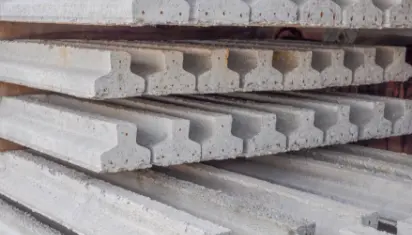
    Although Brecon SL Synchronous Vibrators are not vibration tables in their own right, they can be combined with a variety of precast and prestressed concrete forms to provide the same functionality as a vibratory table for compaction.

    Their inverter-controlled synchronous motors can be tuned to provide consistent vibration – within 1 rpm across all units – throughout the full length or diameter of a concrete form for consistent, uniform compaction and superior product finish in less time. These synchronous vibrators are compatible with a variety of precast and prestressed concrete forms, including:

    Contact Us

    Heavy Duty Vibration Beams

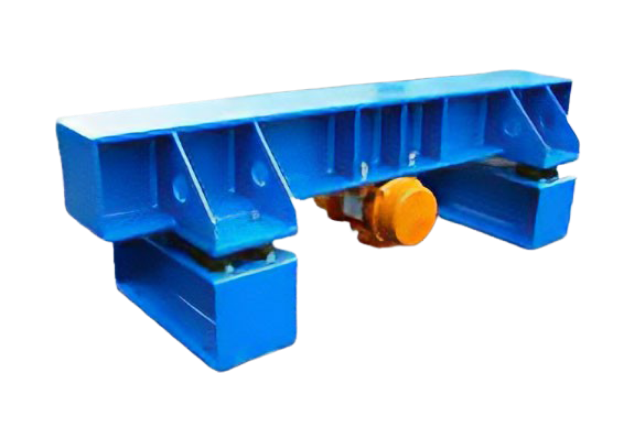
    Portable Deca heavy-duty trestle vibration beams (also called live-beam vibratory tables) provide a more flexible and quieter alternative to fixed vibrating tables. They can be used individually or in multi-unit arrangements to expand flexibility for matching specific application requirements and increasing the quality and consistency of molded or settled products.

    • Four length options – from 47″ to 71″ – provide the strength to handle acceleration forces up to 8Gs, at up to 9,000 rpm.
    • Multiple units can be configured up to fifteen feet apart to handle heavier loads and longer objects.
    • Heavy-duty rubberized compression mounts provide superb stability and solid vibration resistance.

    Contact Us

    Harness More than 35 Years of Experience in Targeted Vibratory Control Today!

    Ask your Deca representative to address the finer points of consideration related to your specific vibrator table, compaction, or concrete form applications. And harness more than 35 years of experience in targeted vibratory control. Call us at (800) 974-9422, or contact us via our form.

      Vibration Tables FAQs

      What are vibration tables and what are they used for?

      Vibration tables fulfill the critical functions of densifying, de-airing, settling, packaging and separating bulk solid materials. In specialized use cases, vibration tables can also provide fatigue testing for products.

      Companies across a wide range of industries — including manufacturing, agriculture, construction, mining, electronics and food processing — rely heavily on vibration tables to improve productivity, lower waste and ensure product quality. 

      For instance, candy makers depend on vibration tables to effectively yet gently remove air from chocolate in molds, enabling consistency and improving texture. Another example of a vibration table use case involves vibrating filled packages to allow bulk solid materials to settle into the most compact arrangement.

      What kind of maintenance do vibration tables require?

      Like all pieces of essential equipment with moving parts, vibration tables need preventive maintenance. This can include cleaning the table routinely, inspecting its parts and maintaining the surrounding environment so that the table can operate efficiently.

      Every type of vibrating table requires a specific maintenance solution. At Deca Vibrator Industries, Inc., our expert team members offer performance and support services to clients. Determining the correct techniques and frequency for vibrating table maintenance is part of the customer support our company provides.

      As long as a vibrating table is installed to proper specifications and routinely maintained, it can remain viable for a long time.

      What are the different types of vibration tables available?

      Many clients of Deca Vibrator Industries, Inc., are pleased to learn that vibration tables come in various types. One of the most popular is the electric vibration table, which can operate outdoors or indoors with access to electricity. Companies that want an alternative to an electric vibration table may prefer a pneumatic or hydraulic model.

      Aside from the energy source a vibration table requires, each model has a unique look based on its function. Flat tables have a solid base, whereas grid-top tables have holes for sorting or counting.

      How do I choose the right vibration table for my application?

      Outline exactly what you need the vibration table to do. Understanding how you intend to use it can narrow your search quickly. Figuring out which type of table you need may seem challenging without assistance, but we can help. At Deca Vibrator Industries, Inc., we specialize in helping clients identify the most appropriate vibration table for their applications. If one does not exist, our team can manufacture a custom-made model suitable for a client’s novel purposes.